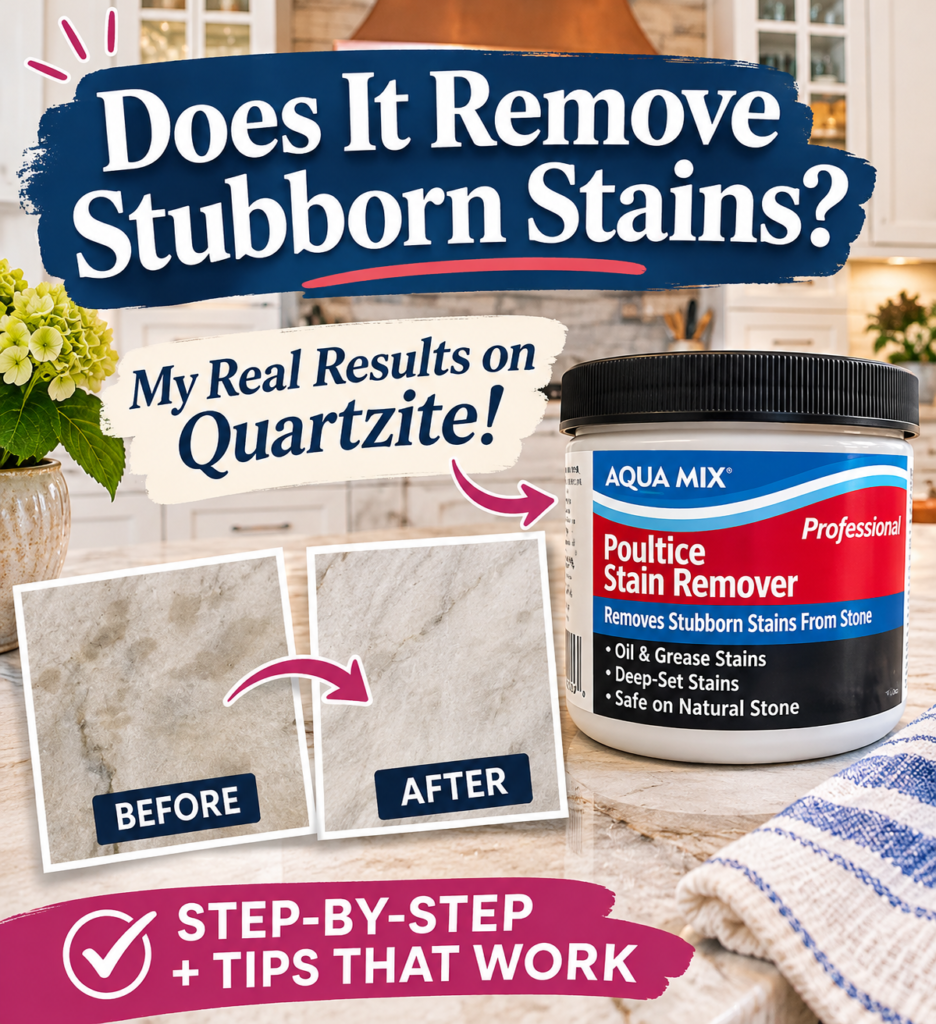
My Aqua Mix Stone Poultice Review
There is one thing I didn’t fully appreciate when I fell in love with my quartzite kitchen island: how easily natural stone can absorb oil. I nicknamed my 10 foot long island “Precious” because every little greasy food spill resulted in a huge ugly stain.
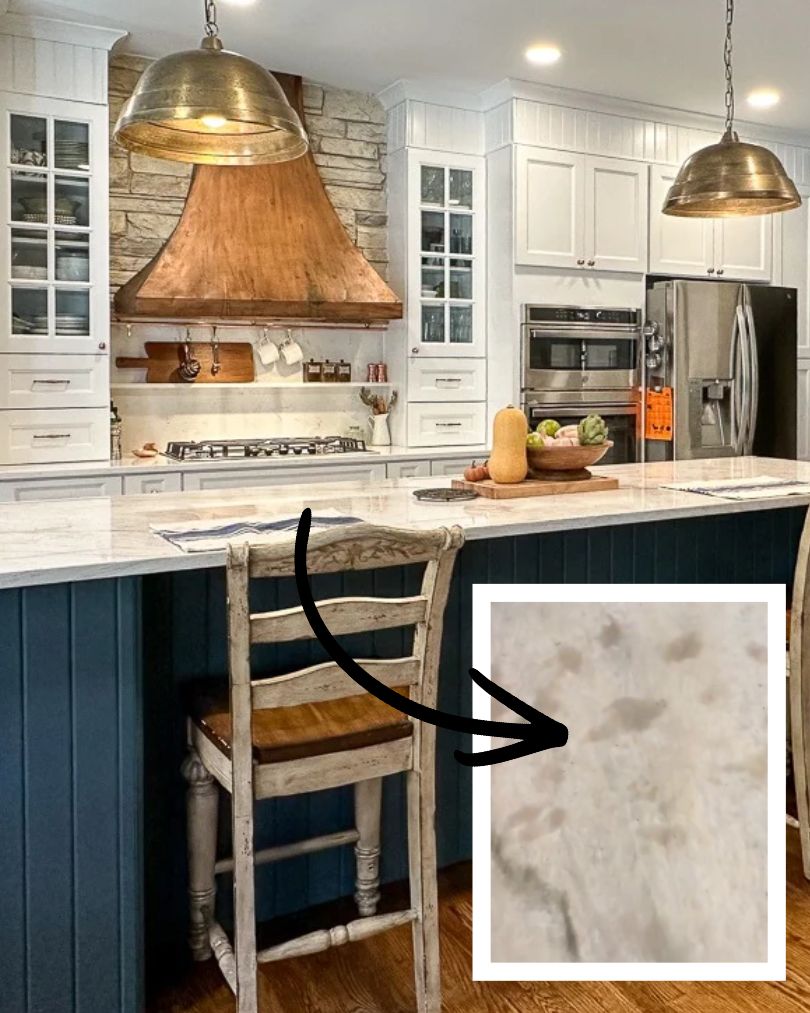
I absolutely love the look of quartzite. It’s beautiful, has so much natural variation, and gives a kitchen that timeless, natural-stone look. But cooking oil, greasy food, and other oily spills? Those can leave dark spots that seem impossible to get rid of.
The first time it happened, I thought I ruined our kitchen island forever. We had chinese take-out, and a piece of sesame chicken left a dark grease spot that would not scrub away.
I tried cleaning it with soap, scrubbing, wiping, and just about everything else I could think of. The problem is that an oil stain isn’t necessarily sitting on top of the countertop. It can penetrate into the porous stone.
I was complaining to my hairdresser about my issue– She and I both had recently remodeled our kitchens, and she also had real quartzite countertops. She had spilled italian dressing on hers and freaked out at the stain. But she found a product called Aqua Mix Poultice Stain Remover, and after seeing how well it worked on her stone, I decided to give it a try.
Today I’m sharing exactly how I used it, what the process looks like, and what you need to know before trying it on your own countertops.

Watch my Step-by-Step Grease Removal Tutorial Here:
Can you remove grease stains from quartzite countertops?
Yes, certain oil and grease stains can be removed from quartzite using a poultice stain remover.
A poultice is a thick paste that sits directly on the stained stone. It works by drawing or absorbing the stain out of the porous surface as the paste dries.
Aqua Mix Poultice Stain Remover is an absorptive clay powder specifically designed to help remove deep-set oil and grease stains from recommended stone and tile surfaces.
The idea is simple: mix the powder with water, apply it over the stain, cover it with plastic wrap, and give it time to work.
One important note about quartzite: Not all quartzite countertops have the same finish or porosity. The manufacturer’s technical information lists honed, unpolished natural stone among its recommended uses, so don’t assume it is approved for every polished quartzite countertop. Check with your stone fabricator and the manufacturer before using it, and always test a small, inconspicuous area first. I used it on my own countertop, but your stone may react differently.
What you’ll need
You don’t need a complicated collection of supplies for this project.
- Aqua Mix Poultice Stain Remover
- Water
- A small mixing bowl
- A spoon or mixing utensil
- Plastic wrap (Saran Wrap)
- A plastic putty knife or scraper
- A soft sponge or clean cloth
- Chemical-resistant gloves
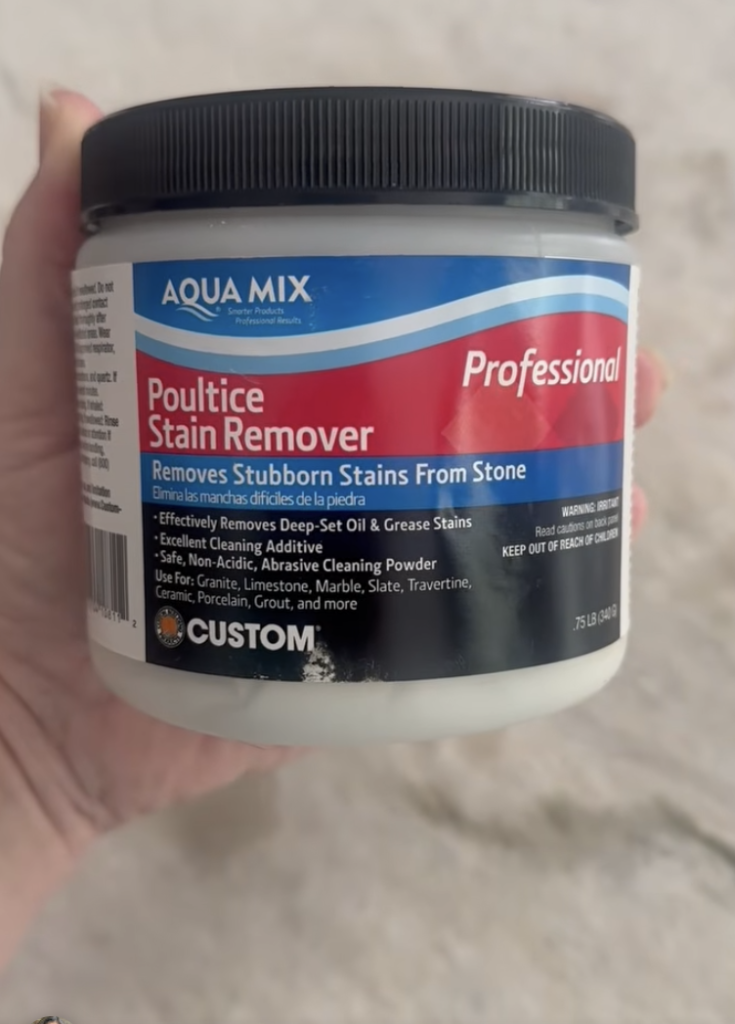
I used the Aqua Mix Professional Poultice Stain Remover. It’s a powder that comes in a container and is mixed with water to create a thick paste.
How to remove grease stains from quartzite countertops
Here is the step-by-step process I followed.
Step 1: Clean the countertop
Start by removing any loose crumbs, dirt, or debris from the countertop.
You want the poultice to make direct contact with the stained area, so give the surface a gentle cleaning with a stone-safe cleaner if needed.
Make sure you follow the product directions and any recommendations from your countertop fabricator.
Step 2: Mix the poultice powder with water
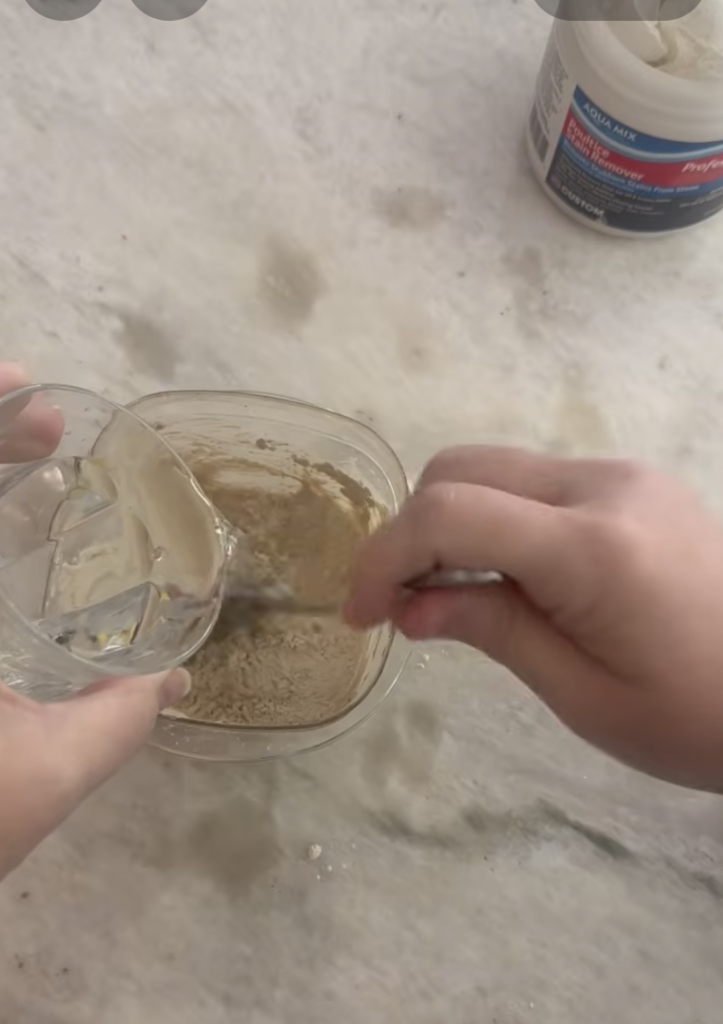
Place a few tablespoons of Aqua Mix Poultice Stain Remover into a small bowl.
Slowly add water and stir until you get a thick, pliable paste. Think cake batter or a thick peanut butter consistency. You want it thick enough to stay where you put it rather than running across the countertop.
I added a little water at a time until I got the consistency I wanted.
Step 3: Spread the paste over the grease stains
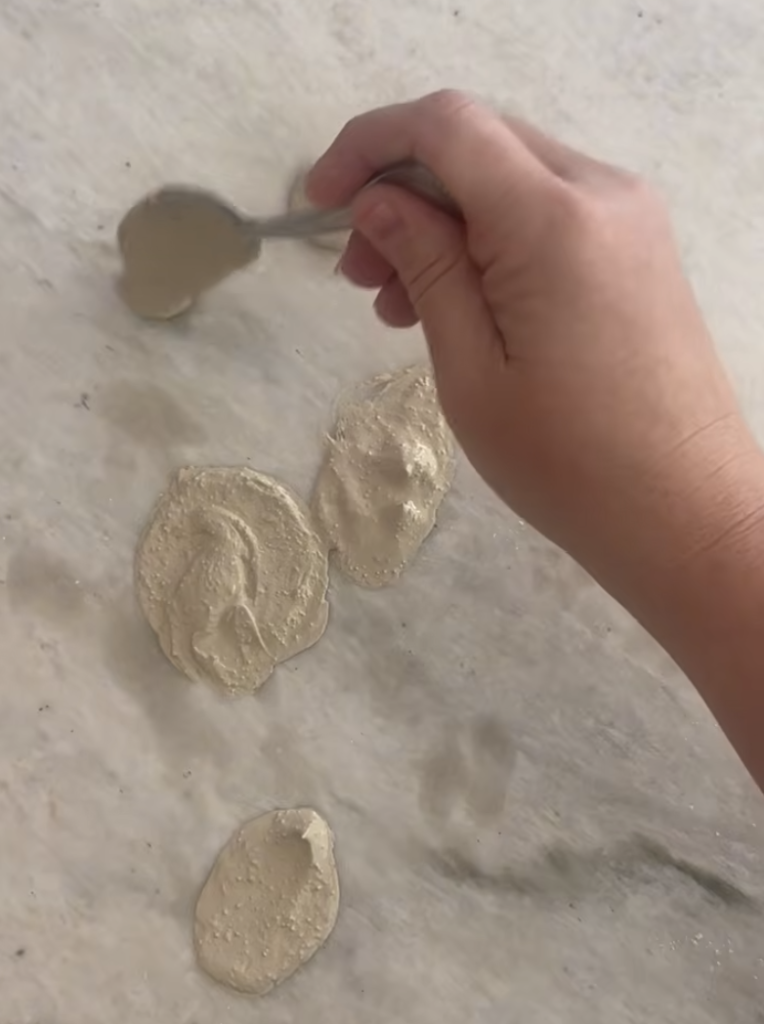
Using a spoon or small spatula, spread the paste directly over the stained areas.
You want a nice, even layer that completely covers each stain.
The manufacturer’s instructions call for approximately 1/4 inch of paste, extending at least 1 inch beyond the edges of the stain.
Don’t just cover the darkest part of the spot. Give the poultice a little extra room around the entire stained area.
Step 4: Cover with plastic wrap
This is the oddly satisfying part!
Take a piece of plastic wrap and cover the entire poultice application. Gently press it down so the plastic makes contact with the paste.
The goal is to slow down the drying process so the poultice has time to work.
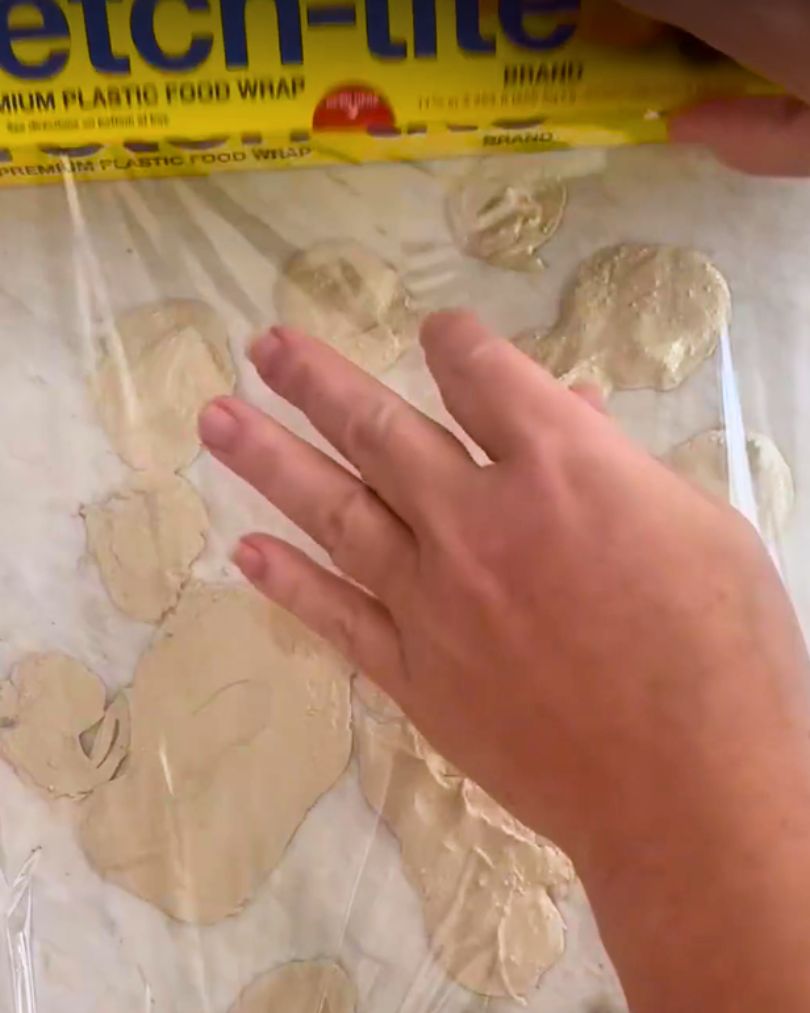
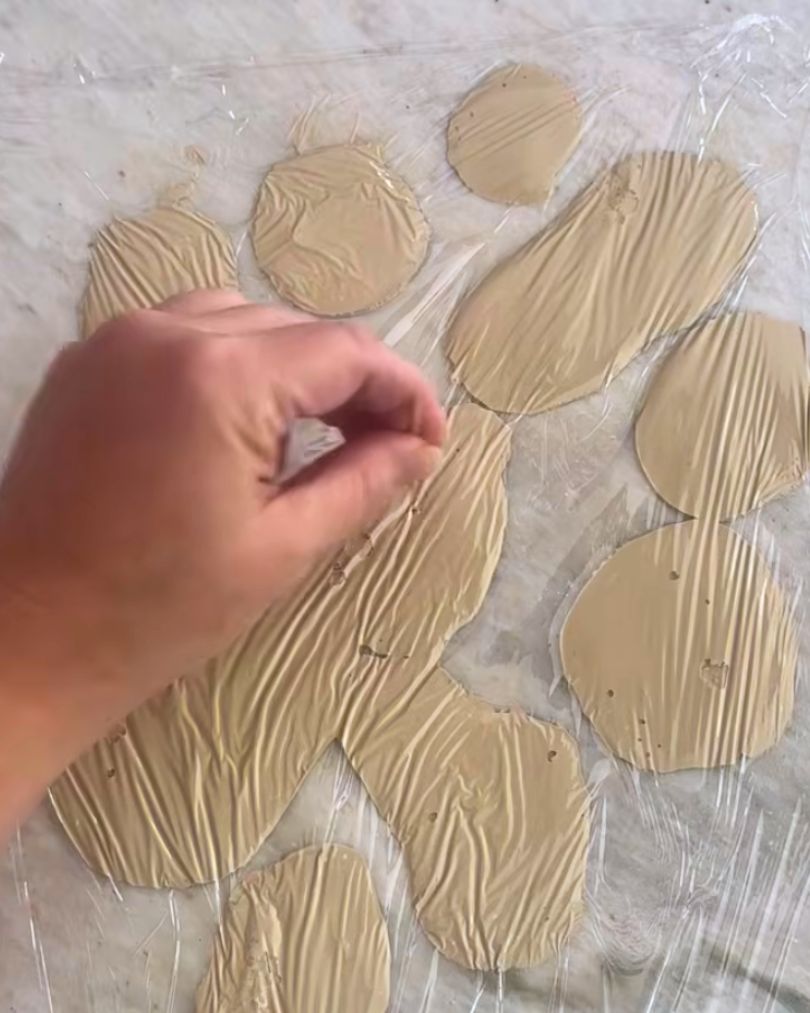
The manufacturer’s directions call for a few very small holes in the plastic to allow minimal air exposure. I used a sharp object to poke small holes through the wrap.
Step 5: Let it sit for 24 to 48 hours
Now comes the part that requires a little patience.
Leave the poultice in place for 24 to 48 hours, following the manufacturer’s directions.
You don’t need to keep checking on it or messing with it. Just give it time.
Depending on the size and depth of the stain, you may need to repeat the process.
Step 6: Remove the dried poultice
Once the poultice has dried, remove the plastic wrap.
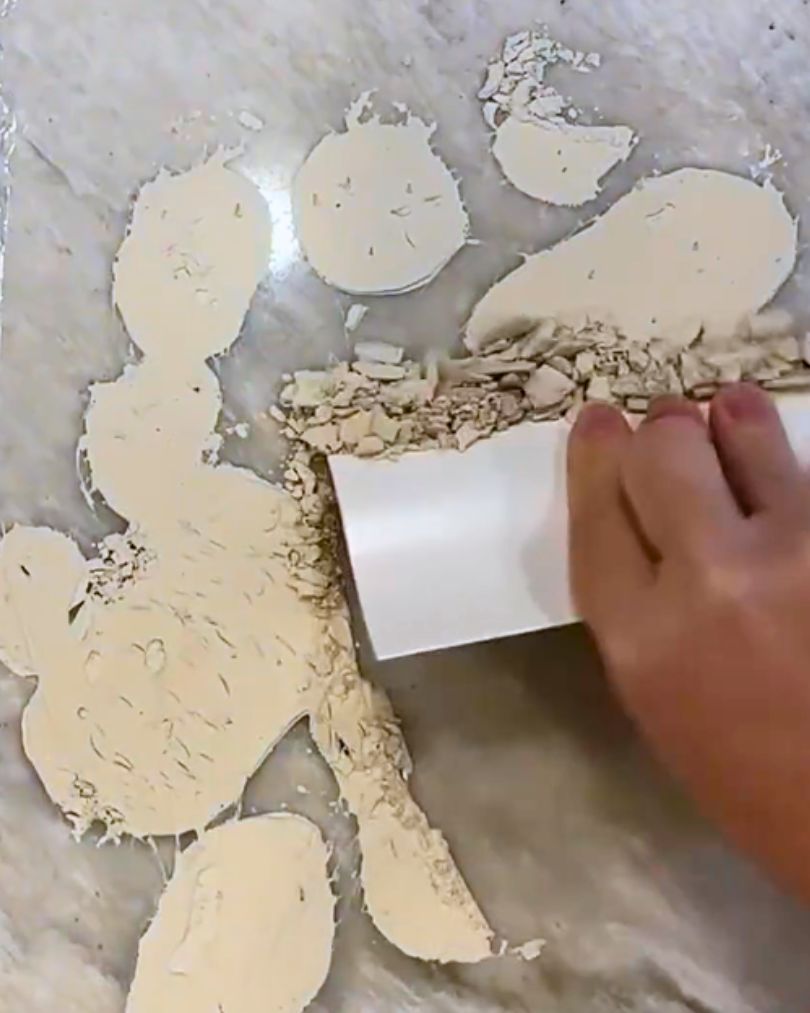
Use a plastic putty knife or plastic scraper to gently lift the dried material from the countertop. Avoid metal tools that could scratch the surface. I used a kitchen bowl scraper but a credit card would work.
If the paste hasn’t dried completely, allow it to finish drying uncovered before removing it.
Clean away the remaining residue with clean water and a soft sponge, following the product directions.
Step 7: Give the countertop time to dry
This is an important step!
After removing the poultice, don’t immediately assume that any darker area means the treatment didn’t work.
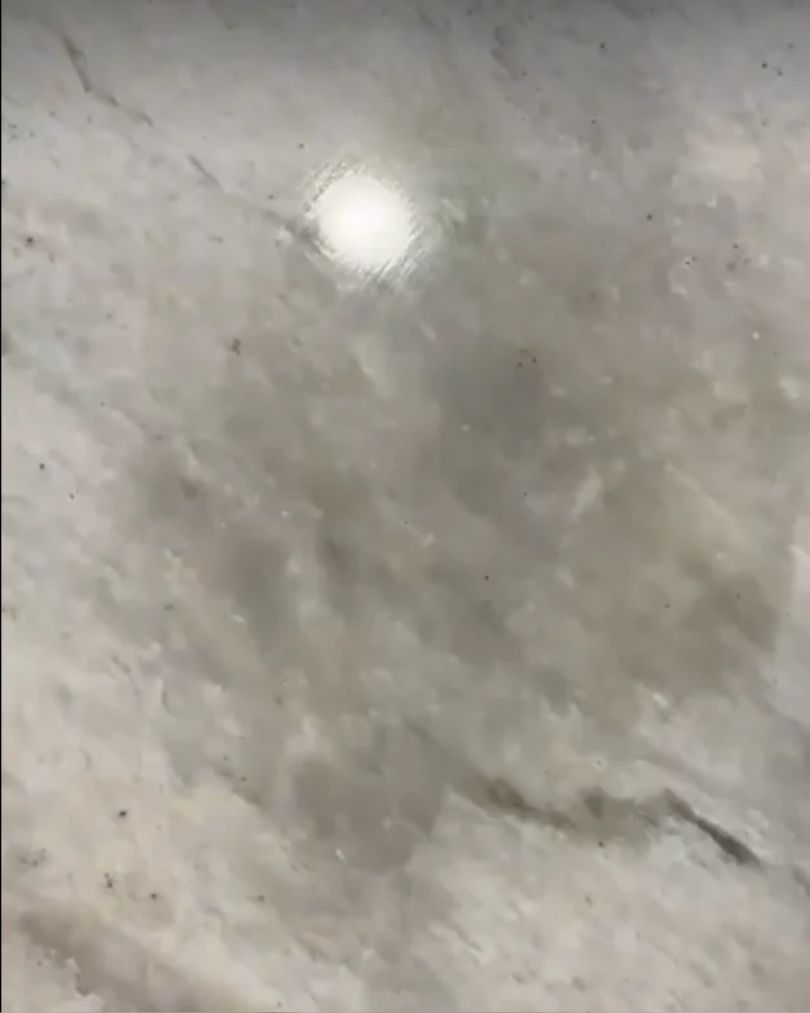
The stone may temporarily darken from absorbed moisture. The manufacturer’s technical information says this discoloration should dry completely within approximately 5 to 7 days.
Give your countertop time to dry before deciding whether you need another treatment.
If the stain is still visible after everything has dried, you can consider repeating the process, provided the product is appropriate for your stone and finish.
Does Aqua Mix Poultice Stain Remover really work?
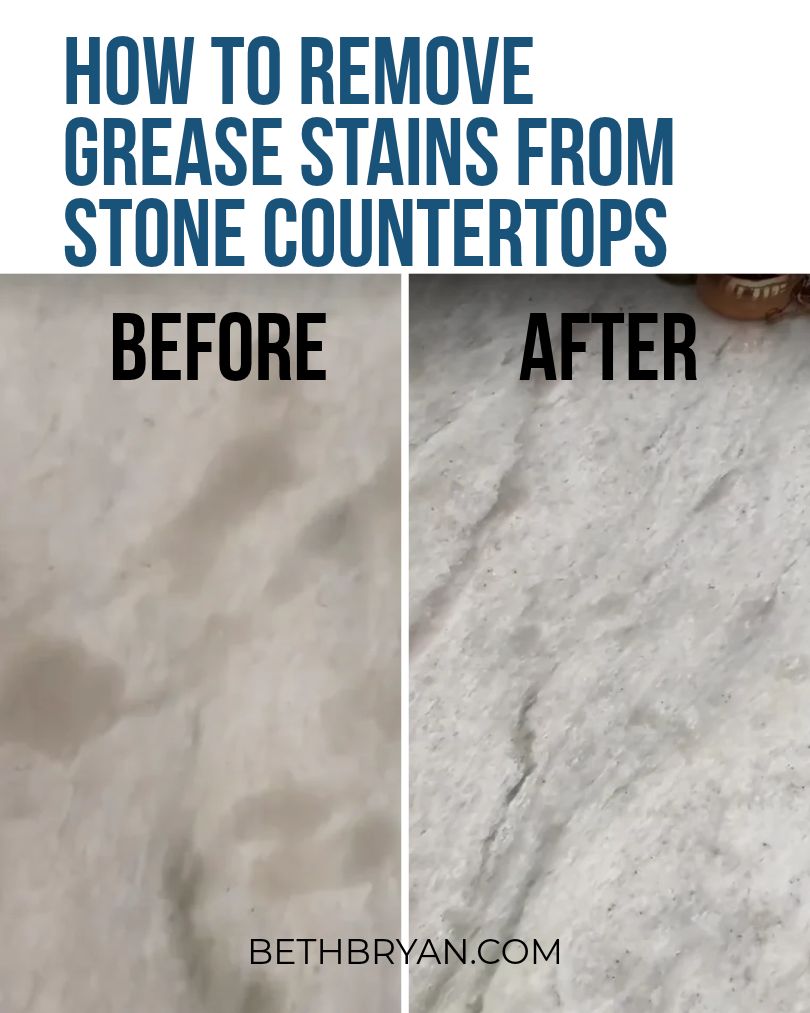
This is the part everyone wants to know! Here are my before and after results:
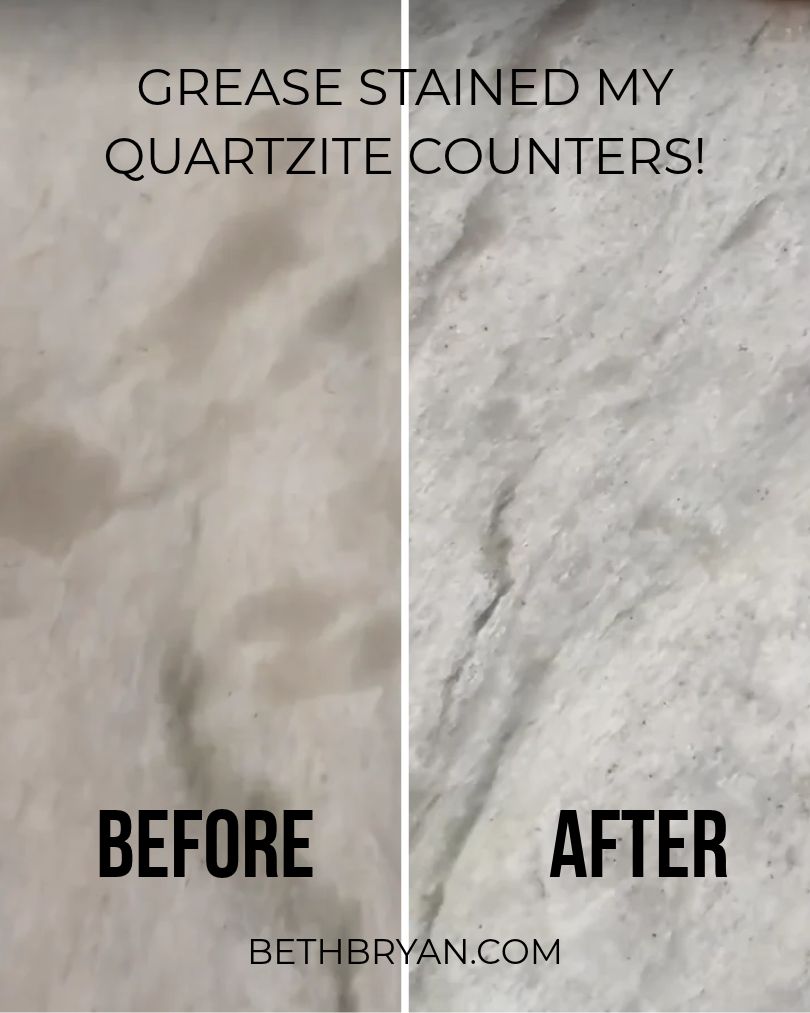
I was genuinely impressed with how well this product worked on the stains I treated on my kitchen island.
I love my quartzite countertops, but I don’t love having to worry every time something oily spills on them. Having a product that can help address those stubborn spots is a welcome addition to my kitchen-cleaning supplies.
Just remember that results can vary depending on the type of stone, its finish, the age and depth of the stain, and whether the stone has been sealed.
This isn’t a magic fix for every countertop stain, but it’s worth knowing about if you’re dealing with stubborn oil and grease spots on compatible natural stone.
A few things to know before treating quartzite
Before you get started, keep these things in mind:
- Test first. Always test a small, inconspicuous area and confirm compatibility with your particular quartzite finish.
- Wear gloves. The manufacturer recommends chemical-resistant gloves when handling the powder.
- Use plastic tools. Avoid metal scrapers that could scratch your countertop.
- Be patient. The treatment takes 24 to 48 hours, and the stone may need several additional days to dry.
- Don’t mix cleaning products. Follow the manufacturer’s directions rather than adding other cleaners or chemicals to the poultice.
- Know your stone. Quartzite, quartz, marble, and granite are not interchangeable. Make sure you’re treating the actual material you have.
Frequently Asked Questions About Removing Grease Stains from Quartzite
How do you get cooking oil stains out of quartzite?
A poultice stain remover designed for compatible natural stone can help draw out deep-set oil stains. Apply the paste according to the manufacturer’s directions, cover it with plastic wrap, allow it to sit for 24 to 48 hours, and remove it with a plastic scraper once dry.
What is the best product for removing oil stains from quartzite?
Aqua Mix Poultice Stain Remover is designed to remove deep-set oil and grease stains from certain porous stone and tile surfaces. However, its manufacturer lists honed, unpolished natural stone among its recommended uses. Confirm that your particular quartzite finish is compatible before applying it.
How long should poultice stain remover stay on quartzite?
The Aqua Mix instructions recommend leaving the poultice in place for 24 to 48 hours. If it hasn’t dried completely, allow it to dry uncovered before removing it.
Why does my quartzite countertop have dark spots?
Dark spots can develop when cooking oil, grease, lotions, or other oily substances penetrate the porous surface of natural stone. The discoloration may be within the stone rather than simply sitting on top of it.
Can I use baking soda to remove oil stains from quartzite?
The Natural Stone Institute describes baking soda-based poultices as one option for oil-based stains on natural stone. However, the appropriate poultice mixture depends on the stone and the stain. Always check with your stone professional before trying a homemade chemical mixture.
Will sealing quartzite prevent grease stains?
Sealing can help reduce how readily some liquids penetrate natural stone, but it does not make a countertop completely stain-proof. Follow your stone fabricator’s recommendations for sealing and maintenance.
My final thoughts
I still absolutely love my quartzite island, and I wouldn’t trade it. Natural stone has so much character, and I love having it in my kitchen.
I just wish I’d known sooner how to deal with those stubborn oil spots!
If you have quartzite countertops and have been staring at dark grease stains wondering if they’ll ever come out, this is one treatment worth discussing with your stone fabricator.
I’m sharing the exact product I used below so you can take a closer look.
Product: Aqua Mix Professional Poultice Stain Remover
[Insert your Amazon affiliate link here.]
As always, check the manufacturer’s instructions and make sure the product is suitable for your particular stone before getting started.