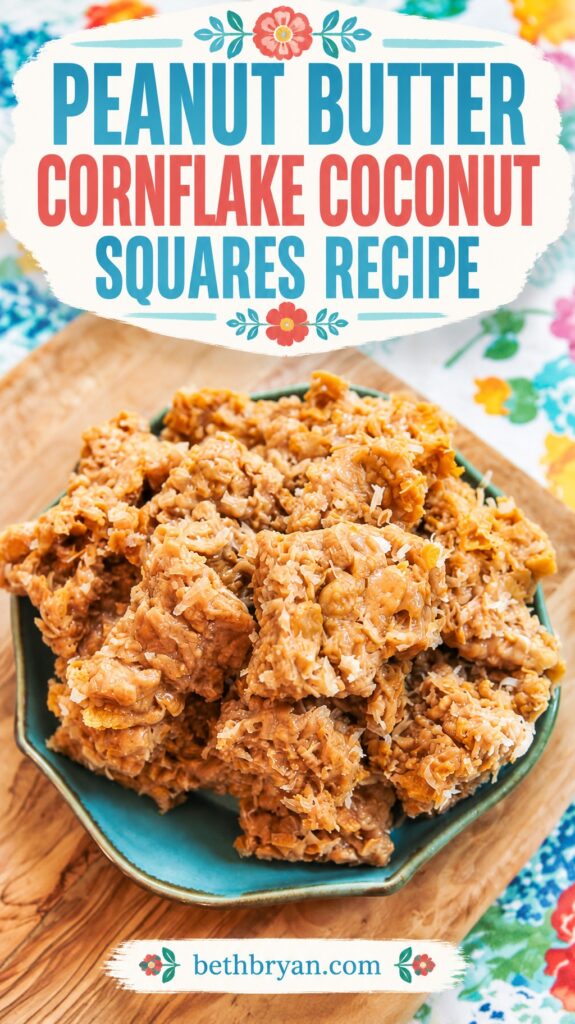
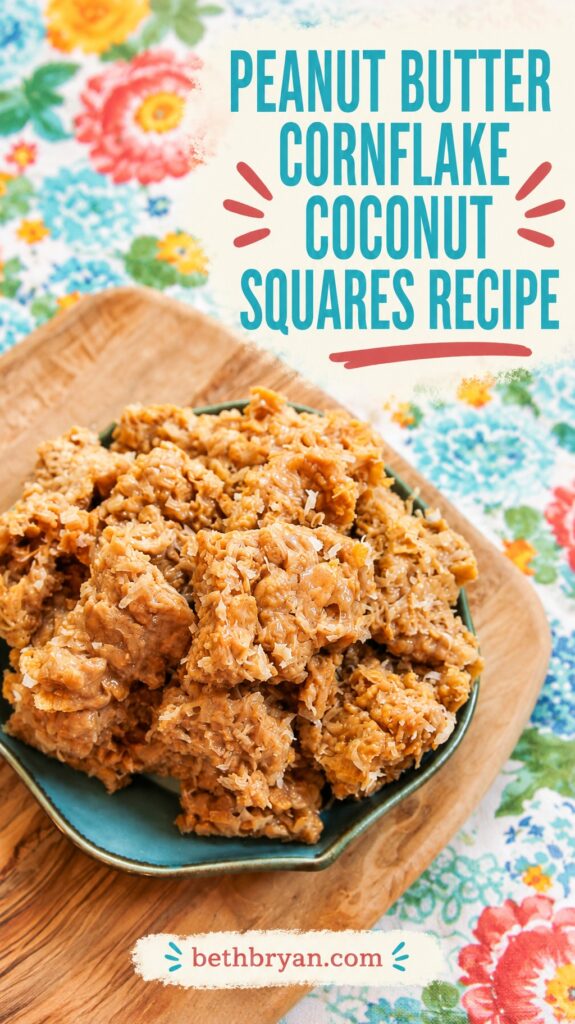
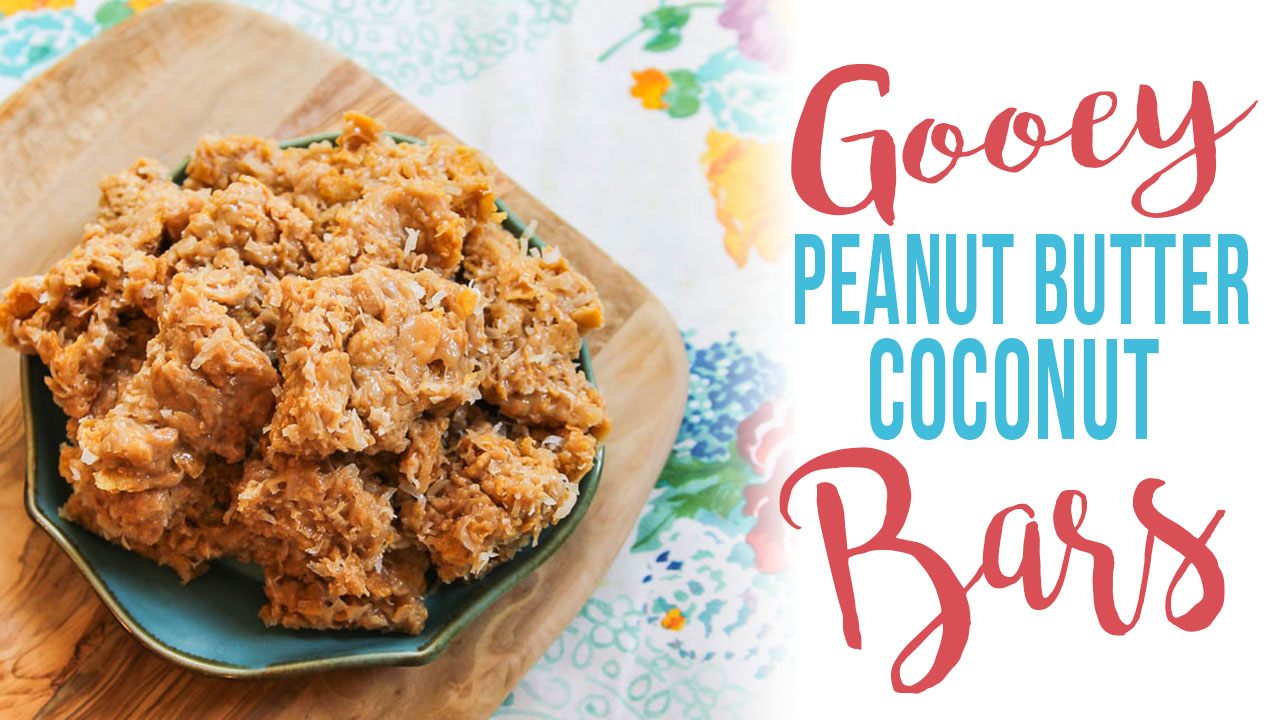
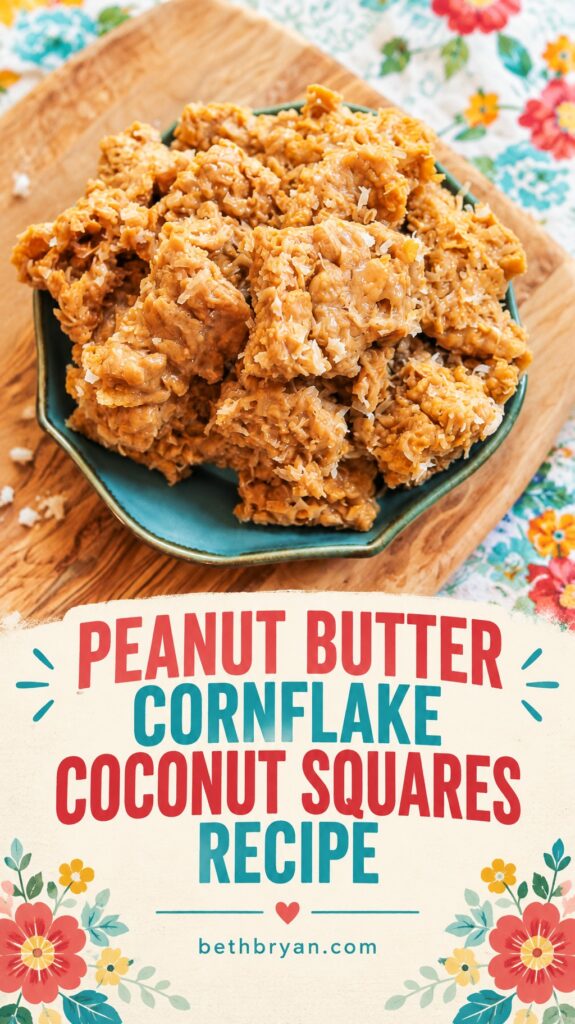
Every year around Thanksgiving or Christmas, I get a craving for these Peanut Butter Cornflake Coconut Squares. I’ve been making them with my mom since I was a little girl, and now when I make them with my kids, the nostalgia hits me like a wave. They’re crunchy, chewy, and sweet enough to bring back all the best childhood memories.

My mom always said you could easily find the best recipes in any cookbook based on how ragged, ripped, and stained the pages were. This was one of those recipes we made so often that the page in the cookbook was grease-stained and stuck together from years of use. It’s only six ingredients and very simple! You don’t even need a cookbook for this one.
Ingredients
- 4 cups Cornflakes
- 2 cups shredded coconut
- 1 cup white sugar
- 1 cup light corn syrup
- 1 Tbsp vanilla extract
- 1 cup peanut butter
Instructions
- In a large mixing bowl combine the coconut and cornflakes. Mix well and set aside
- Bring the sugar and corn syrup to a boil over medium heat, stirring constantly
- Boil until the sugar reaches “soft ball” stage, which is 235 degrees Fahrenheit.
- Remove from heat and add the vanilla and peanut butter, Stir until smooth
- Pour peanut butter mixture over cornflake/coconut mixture
- Mix thoroughly and spread into a greased 9×11 baking dish
- Cut into squares and prepare for a sugar rush like none other.
Notes
Watch the Video
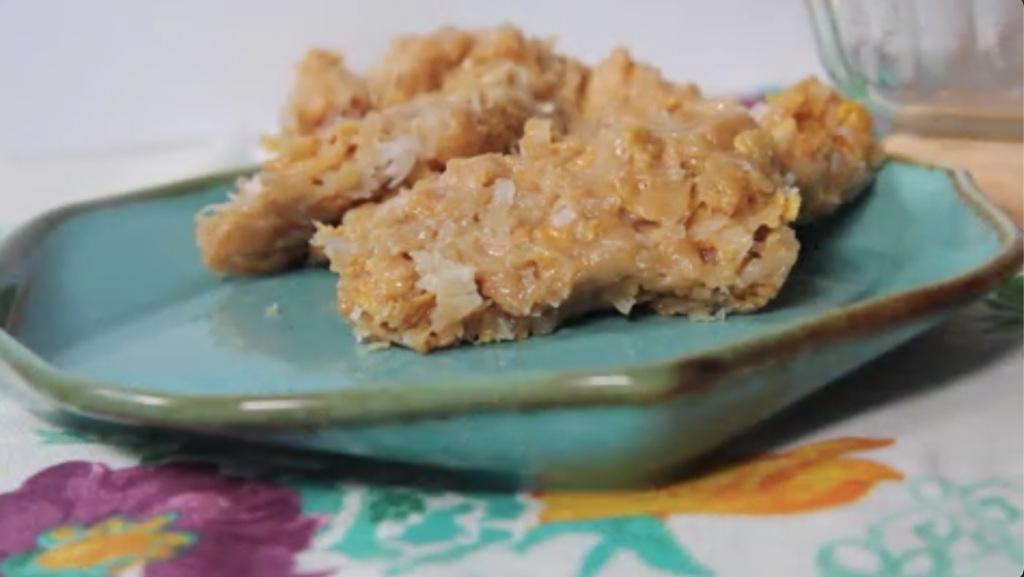
What ingredients do you need for Peanut Butter Cornflake Coconut Squares?
You need just six simple ingredients:
- 4 cups Cornflakes
- 2 cups shredded coconut
- 1 cup white sugar
- 1 cup light corn syrup (yep, for real, another whole cup…)
- 1 tsp vanilla
- 1 cup peanut butter
How do you make Peanut Butter Cornflake Coconut Squares?
Combine the cornflakes and coconut, boil the sugar and corn syrup until they reach soft ball stage, stir in the vanilla and peanut butter, then pour everything together, spread it in a greased 9×11 baking dish, and cut it into squares once it sets.
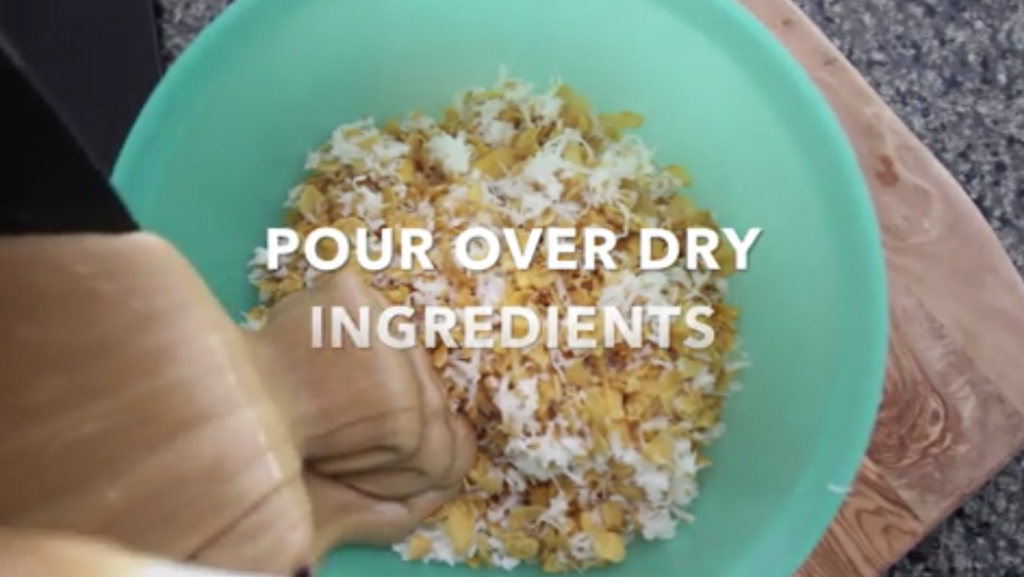
- In a large mixing bowl, combine the coconut and cornflakes. Mix well and set aside.
- Bring the sugar and corn syrup to a boil over medium heat, stirring constantly.
- Boil until the sugar reaches the “soft ball” stage, which is 235 degrees Fahrenheit.
- Remove from heat and add the vanilla and peanut butter. Stir until smooth.
- Pour the peanut butter mixture over the cornflake and coconut mixture.
- Mix thoroughly and spread into a greased 9×11 baking dish.
- Cut into squares and prepare for a sugar rush like none other.
How do you know when the sugar is ready?
The sugar is ready when it reaches the soft ball stage, which is 235 degrees Fahrenheit. I don’t use a thermometer. Instead, I drizzle a little of the syrup into a cup of cold water. If it forms a soft ball, I know it’s done.
Candy Making FAQs
What is the soft ball stage in candy making?
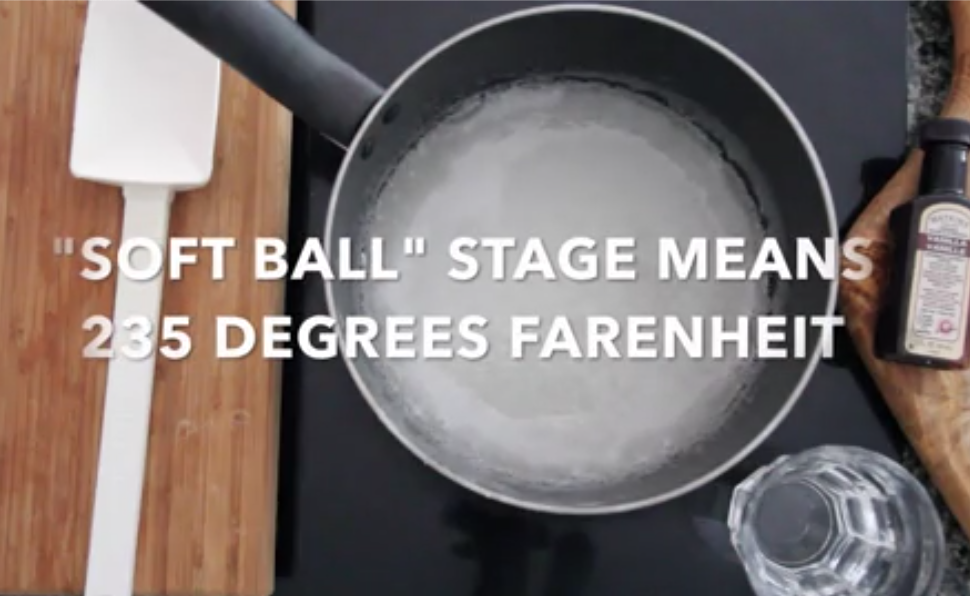
The soft ball stage is a sugar syrup temperature, usually 235 to 245°F (112 to 118°C). At this point, enough water has boiled off that the syrup will form a soft, pliable ball when dropped into cold water. Fudge, fondant, caramels, and many old-fashioned candies and frostings are cooked to this stage. Your Peanut Butter Cornflake Coconut Squares hit it at 235°F, the low end of the range.
How do you know when you’ve hit the soft ball stage without a candy thermometer?
This is the cold water test:
- Fill a small cup with cold tap water, and add a few ice cubes if your tap is warm.
- Take the pan off the heat for a moment so the syrup stops bubbling as hard.
- Drip a small spoonful of syrup into the water.
- Let it sit for a few seconds, then gently pick it up with your fingers.
- If it forms a soft ball that holds its shape but flattens when you press it, it’s at soft ball stage.
If it dissolves into threads or stays a liquid, keep boiling and test again every 30 seconds or so. If it turns hard and brittle, you’ve gone too far. Test with a fresh cup of water each time, since warm water gives a misleading result.
What are the other stages of sugar cooking?
| Stage | Temperature | Cold water test |
|---|---|---|
| Thread | 230–234°F | Forms a thread that hangs from the spoon |
| Soft ball | 235–245°F | Soft ball that flattens when pressed |
| Firm ball | 245–250°F | Firm ball that holds its shape |
| Hard ball | 250–266°F | Hard ball that’s still slightly pliable |
| Soft crack | 270–290°F | Brittle threads that bend a little |
| Hard crack | 300–310°F | Brittle threads that snap, used for lollipops and brittle |
| Caramel | 320–350°F | Golden to amber color, no water test needed |
Is a candy thermometer more accurate than the cold water test?
Yes, usually. A thermometer gives you a number, so you don’t have to judge the syrup by eye. The cold water test is useful when you don’t have a thermometer, but it depends on your judgment and the temperature of your water. Still, many experienced candy makers use it.
How do I check whether my candy thermometer is accurate?
Put the thermometer in a pot of boiling water. At sea level, it should read 212°F (100°C). If it reads differently, that difference is your correction. For example, if it reads 210°F, add 2 degrees to the target temperature for every recipe you make with it.
Does altitude change candy-making temperatures?
Yes. Water boils at lower temperatures at higher elevations, so syrup reaches each stage at a lower temperature. A general rule is to reduce the target temperature by about 1°F for every 500 feet above sea level. The cold water test still works at altitude because it measures the syrup’s texture rather than its temperature.
Why did my candy turn out grainy?
Graininess usually comes from sugar crystals forming in the syrup. Common causes include:
- Stirring after the syrup starts boiling, which can knock crystals loose into the mixture
- Sugar crystals clinging to the sides of the pan, which can fall back in and seed new crystals
- Not dissolving the sugar fully before boiling
To prevent this, stir until the sugar dissolves, then stop stirring. You can brush down the sides of the pan with a wet pastry brush to dissolve any stray crystals. Corn syrup, which is in your recipe, helps prevent graininess because it interferes with crystal formation.
Why does my candy come out too soft or too hard?
- Too soft or sticky: The syrup didn’t reach the target temperature, so too much water remained. Cook a little longer next time, or confirm your thermometer reads accurately.
- Too hard or brittle: The syrup went past the target. Pull it off the heat sooner, especially near the end, since the temperature climbs quickly.
- Still soft after cooling: Humidity can make candy soft. Try making it on a dry day, and store it in an airtight container.
Why does humidity matter for candy making?
Sugar absorbs moisture from the air. On humid or rainy days, candy can get sticky or soft even when you’ve hit the right temperature. Making candy on a dry day, with the air conditioning on if possible, gives more reliable results.
What kind of pan should I use?
A heavy-bottomed saucepan is best because it heats evenly and reduces the risk of scorching. Use a pan that’s large enough for the syrup to bubble up without overflowing. Syrup can expand a lot when it boils.
Why shouldn’t I stir the syrup after it starts boiling?
Stirring can introduce sugar crystals, which can cause graininess. Many recipes say to stir only until the sugar dissolves, then let the syrup boil undisturbed. Gently swirling the pan is fine if you need to even out the heat.
How should I handle hot sugar safely?
Hot sugar sticks to skin and causes serious burns, and it stays dangerously hot for a long time.
- Keep children and pets away from the stove while you cook.
- Don’t taste the syrup straight from the spoon.
- If you get hot syrup on your skin, cool it under cold running water for at least 10 to 15 minutes. Don’t try to peel it off.
- Use a long-handled spoon, and keep your face away from the steam.
What should I do before pouring my candy into the pan?
Have your pan prepared before you start cooking. For the Peanut Butter Cornflake Coconut Squares, that means greasing the 9×11 baking dish ahead of time. Syrup sets quickly, so you want everything ready when it’s time to pour.
How should I store homemade candy?
Most candies keep best in an airtight container at room temperature, away from heat and humidity. Layer pieces with wax paper so they don’t stick together. Peanut butter and coconut candies like your squares usually keep for a week or so. Check them periodically for stickiness or changes in texture.
Can I make candy ahead of time?
Yes. Many candies, including your squares, can be made a day or two ahead, which makes them a good choice for holidays and gift-giving. For best texture, store them at room temperature rather than in the refrigerator, since refrigeration can make some candies sticky or cause moisture to collect on them.