Updated March 4, 2026
If you’ve ever stood in the stain aisle at the hardware store feeling completely overwhelmed, this post is for you.
Staining wood furniture sounds scarier than it is. I know because I used to think so too — until I stained this sofa table top and realized that staining wood is actually one of the more forgiving DIY projects you can tackle. Sixteen years later, and that table is still going strong today, and I’ve stained dozens of pieces since then using the same simple approach.
Here’s everything I’ve learned, organized so you can stop overthinking it and just get started. Don’t be scared- just start staining! I’m here to tell you that if you’re nervous, don’t be. It will be ok, I promise. Just go for it.
What You Need to Stain Wood Furniture
Before you begin, gather these supplies:
(My affiliate links — I earn a small commission at no cost to you)
- High Quality Wood stain (I prefer Minwax oil-based or water-based — more on this below)
- Foam brushes (buy a multipack — they’re cheap and disposable) (if you want to get fancy, your could try a lambswool applicator for stain, but I prefer foam.)
- Paper towels or old rags (a lot of them)
- 120-grit and 220-grit sandpaper (these Boshcraft washable sanding blocks are great!)
- Tack cloth for wiping dust
- Wood conditioner (optional but helpful for pine and soft woods)
- Polyurethane or all-in-one stain + poly combo for sealing
- Nitrile gloves (trust me on this one)
- Drop cloth or cardboard to protect your surface
Oil-Based vs. Water-Based Stain — Which Should You Use?
This is the question I get asked most often and the answer depends on your project.
Oil-based stain penetrates deeper, gives richer color, and is more forgiving if you’re a beginner because you have more working time before it dries. The downside is longer drying time (usually 24 hours between coats) and stronger fumes, so work outside or in a well-ventilated space.
Water-based stain dries faster (sometimes within an hour), cleans up with soap and water, and has lower VOCs. It works beautifully on raw wood but can raise the grain slightly, so a light sanding between coats is a good habit.
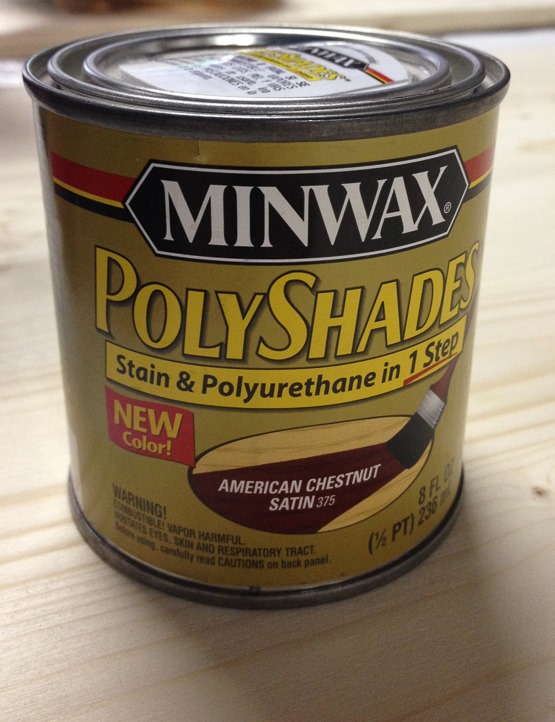
My lazy girl recommendation: For furniture, I almost always reach for an oil-based all-in-one stain and polyurethane combo. It cuts out the separate sealing step and the results are consistently beautiful. One less thing to buy, one less step to do.
How to Stain Wood Furniture — Step by Step
Step 1: Sand Your Piece First
If your furniture is raw unfinished wood, start with 120-grit sandpaper to smooth any rough spots, then finish with 220-grit for a silky surface. Always sand with the grain, never against it.
If you’re restaining an already finished piece, you’ll need to strip the old finish first or at minimum sand it down until the surface is dull and ready to absorb new stain. This step is not optional — stain cannot penetrate a sealed surface.
Wipe away all dust with a tack cloth before moving on.
Step 2: Apply Wood Conditioner (Optional but Smart)
Wood conditioner is a pre-stain treatment that helps soft woods like pine absorb stain more evenly. Without it, pine tends to get blotchy and streaky, especially on flat surfaces.
If you’re working with pine, poplar, or any other soft wood, apply conditioner and let it soak in for 15 minutes before staining. If you’re working with oak, walnut, or another hardwood, you can skip this step.
Step 3: Apply Stain With a Foam Brush
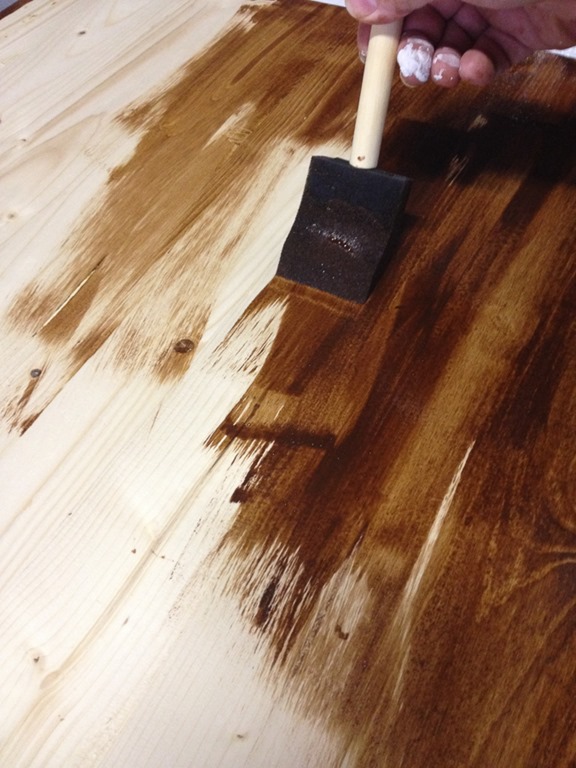
Use a cheap foam brush for all your staining projects. They come in packs of nine, and they are so inexpensive you can use them and throw them away without any guilt. Trust me on this- cleaning oil based stain out of brushes is not fun. I would never recommend using a foam brush for paint, but for stain? Foam brushes are awesome. They are the biggest timesavers for a job like this.
Dip your foam brush and apply a generous coat of stain, always moving with the grain of the wood. Don’t be stingy — lay it on thick. Work in sections if your piece is large, finishing one area completely before moving to the next.
Always keep your brushstrokes with the grain of the wood when applying the stain. Never go against the grain. Trust me on this. Go with the grain, back and forth, nice and easy.
Step 4: Wipe Off the Excess
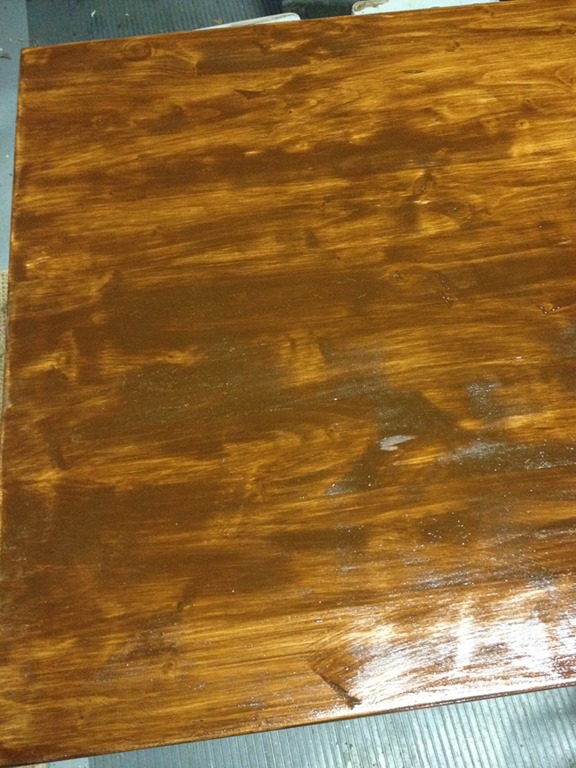
Use paper towels to wipe off the excess. Because like foam brushes, they are also disposable. Grab a big wad of paper towels and remove all that excess stain that you just applied. Rub back and forth WITH THE GRAIN. Always stay with the grain! Very important.
This is the step that makes or breaks your stain job.
How long you leave the stain on before wiping affects the final color. More time before wiping = darker result. Less time = lighter. Do a test on the underside of your piece first to find your sweet spot.

Stain is messy and will bleed, so work quickly to correct any “oops” that occur. When I flipped over the pieces of wood, there were drips and smudges where the excess stain bled on the backs. Some of them had already started to dry a little bit. Don’t freak out if this happens:
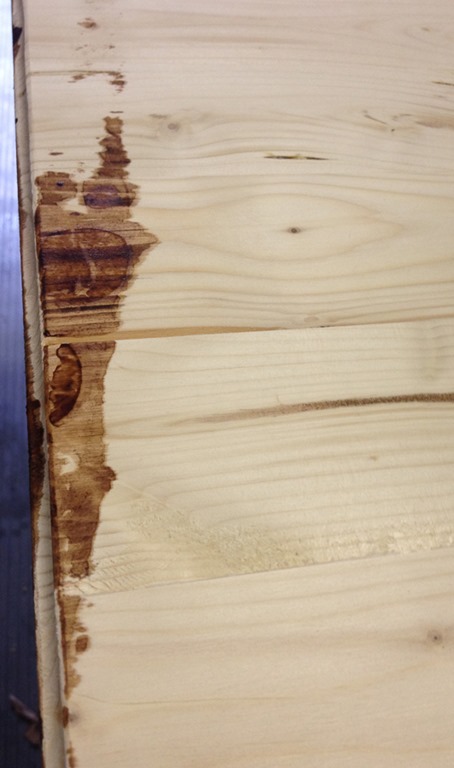
If this happens, just apply an extra thick layer of stain on top of the drips, and scrub it back in forth in a squiggly motion to “erase” any of the areas where bleeding occurs. Oil stain is forgiving and those marks disappeared right away by using this method:
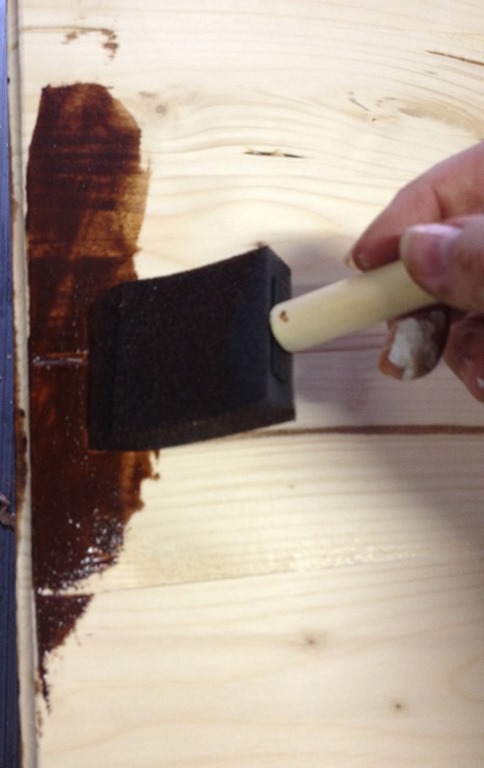
Step 5: Let It Dry Completely
Let each coat dry completely before sanding. Put a fan on it or sit it outside in the sunshine and let it dry. You don’t want the stain to be sticky or tacky while sanding. It needs to be completely dry.
Oil-based stain needs at least 24 hours to dry before a second coat or sealer. Water-based stain can be recoated in as little as 2 hours. Read your can — this is not the step to rush.
While it’s drying, keep it away from dust and pet hair. Speaking from experience here.
Step 6: Yes, you do need to sand between each coat.
I know you probably didn’t want to hear that, but it needs to be done. It will smooth out the wood and give you a nice glossy finish in the end. You want to be able to rub your hand over it and not feel any scratchiness. You can use regular fine grit sand paper, or if you’re lazy like me, invest in a small palm sander for jobs like this.
Step 7: Apply a Second Coat if Needed
If your first coat looks lighter than you wanted, apply a second coat the same way. Build up color gradually rather than trying to get it all in one thick coat.
Step 8: Seal Your Work
If you used a straight stain (not an all-in-one), you need to seal it with polyurethane to protect the finish. Apply 2-3 thin coats of poly in the sheen of your choice — matte, satin, or gloss. Let each coat dry fully before applying the next, and lightly sand with 220-grit between coats for the smoothest finish.
Even though I would definitely recommend the Minwax Polyshade all-in-one stain, I have to admit to you guys that I still added a final top coat of Minwax Fast Drying polyurethane in a satin finish to achieve a nice final sheen that I wanted for my end tables. Also let me say that they are not lying about that fast drying part. I applied this final top coat outside in the sunshine and within minutes it was dry enough for me to touch. Be sure to work quickly with this stuff, using the same methods of applying as described above—back and forth, with the grain.
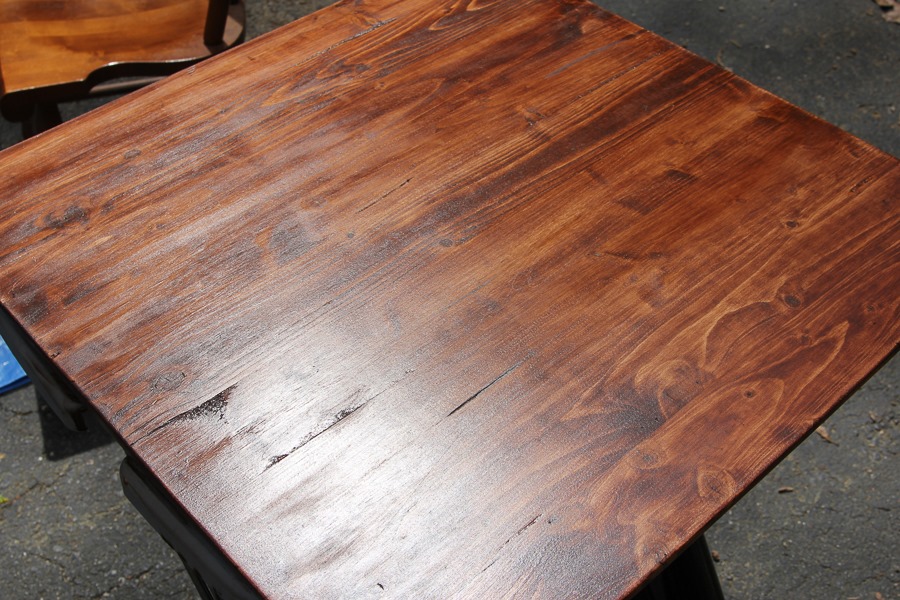
I applied two coats of stain plus a final coat of poly to get this table top finished. The number of coats are up to you. It’s a lather, rinse, repeat kind of process, and more coats of stain will make your wood color deeper and richer each time.
Here is The Finished Stained Table Top Reveal!
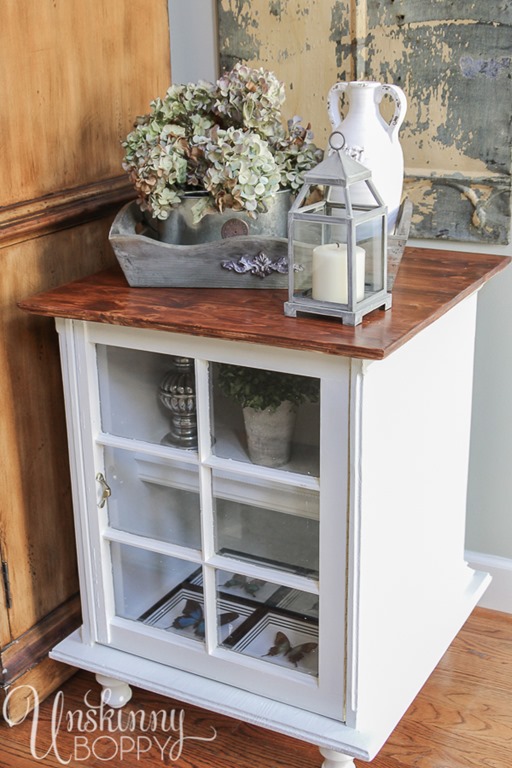
So, there you go! That is it! How simple was that? Be sure to come back tomorrow to find out my tips for how I decorated my new end tables in my living room.
My Best Tips for Staining Wood Furniture
After doing this for years, here’s what I’d tell a friend standing in their garage about to stain their first piece:
Always go with the grain. I cannot say this enough. Going against the grain creates visible scratches that stain will make worse, not better.
Work in a well ventilated area that you don’t mind getting dirty. Garages are good, outdoors is fine, but be aware if you’re working outside in the sunshine that you will need to work quickly so the stain doesn’t get too tacky while you’re still working with it. Shaded areas without any breezes are best while you’re applying the stain. Sunny spots with lots of wind are great for drying stain quickly in between coats.
Wear gloves. Stain stains. Your hands, your clothes, your porch. Put on gloves before you even open the can. I did not wear gloves. I have regrets.
Protect your workspace. Stain is messy, so drips are bound to happen. Also use a drop cloth to protect your floors.
Work in thin coats. One thick coat looks uneven. Two thin coats look professional.
Protect your lungs. It also goes without saying that you’ll want to protect your lungs and not breathe in the fumes, so wear a safety mask if you feel that you need one.
Test on a hidden area first. The underside of a tabletop, the back of a drawer — always test your color before committing to the whole piece.
Don’t panic if it looks dark when wet. Stain always looks darker wet than it dries. Wait until it’s fully cured before deciding you hate the color.
Old rags can spontaneously combust. This sounds dramatic but it’s real. Oil-soaked rags generate heat as they dry. Lay them flat outside to dry or submerge them in water in a metal can before throwing away. Don’t ball them up inside.
Common Staining Mistakes and How to Fix Them
Blotchy, uneven finish: Usually caused by staining without conditioning soft wood, or not wiping off excess evenly. You can sometimes fix this by applying another coat of stain and wiping more evenly. On badly blotchy pieces, you may need to sand back to bare wood and start over with conditioner.
Stain won’t absorb: Your wood still has old finish on it. Strip or sand more aggressively before trying again.
Brush marks visible: You used a bristle brush instead of foam, or you worked against the grain. Sand lightly and apply another coat with a foam brush.
Color is too dark: Apply a small amount of mineral spirits (for oil-based stain) with a clean rag to lighten and even out the color while still wet. Once dry, there’s not much you can do except embrace it or sand back.
Color is too light: Apply another coat and leave it on longer before wiping.
What to Shop — My Staining Favorites
(Affiliate links — I earn a small commission at no cost to you)
- High Quality Wood stain (I prefer Minwax oil-based or water-based — more on this below)
- Foam brushes (buy a multipack — they’re cheap and disposable) (if you want to get fancy, your could try a lambswool applicator for stain, but I prefer foam.)
- Paper towels or old rags (a lot of them)
- 120-grit and 220-grit sandpaper (these Boshcraft washable sanding blocks are great!)
- Tack cloth for wiping dust
- Wood conditioner (optional but helpful for pine and soft woods)
- Polyurethane or all-in-one stain + poly combo for sealing
- Nitrile gloves (trust me on this one)
- Drop cloth or cardboard to protect your surface
Most furniture staining projects take 1-2 days from start to finish when you factor in drying time between coats. The actual hands-on work is usually 1-3 hours depending on the size of your piece.
Yes, always seal stained wood with polyurethane or another protective topcoat unless you used an all-in-one stain and poly product. Unsealed stain will wear and scuff quickly, especially on tabletops and high-traffic surfaces.
You can, but you need to prepare the surface first. Sand it down until it’s dull and the existing finish is no longer shiny. The new stain won’t absorb into a sealed surface.
An all-in-one stain and polyurethane combo like Minwax Polyshades is the most forgiving option for beginners. It combines two steps into one, comes in a wide range of colors, and is easy to apply with a foam brush.
Usually one to two coats is enough for most projects. The first coat establishes the base color and the second deepens it. More than two coats rarely adds anything and can get tacky.
On raw unfinished wood, you can sometimes skip sanding if the surface is already smooth. On previously finished furniture, sanding is not optional — the stain cannot penetrate a sealed surface without it.
Stain penetrates the wood grain and enhances its natural texture and pattern. Paint sits on top of the surface and covers the wood grain completely. Stain is generally more durable for surfaces that get heavy use, while paint offers more color options and covers imperfections better.
For oil-based stain, use mineral spirits to clean brushes and tools. For water-based stain, soap and water works. Dispose of oil-soaked rags carefully — lay flat outdoors or submerge in water before discarding to prevent fire risk.
Did you enjoy this post? Check out more of my Lazy Girl’s Timesaving Tips!


I love the all in one combo, makes it much quicker. And your “erase” idea is a new one for me, I am sure I will be putting it into action. 🙂
I prefer, “clever” to “lazy.”
Good goin’.
Beth,
Good job pointing out that you can reactivate even dried stain to even it out. Most people don’t know this but even after your done staining if you see a little imperfection you simply just go back over it with more stain to even it out!
It’s really good technique to stain the furniture to make it look good.The technique may save your money and also keep you busy in useful activities like this.The sharing of useful experience is great for the readers, who were thinking to do the same.
[…] proud of him, and HIS eye for design, as well. We make a great team. My only contribution was staining the wooden tops and helping him paint them. But aside from that my only real contribution to these end tables is […]
I’m not that much of a online reader to be honest but your sites really nice, keep it
up! I’ll go ahead and bookmark your website to come back in the future.
All the best
[…] But since customized cutting boards was a little out of my price range, I picked up 12×16 pieces of birchwood from my local art supply store and stained it using the tutorial on Unskinny Boppy: […]
I used to think having my work published would give me credibility in writing circles. Now that I have had some work published, I don’t really think about it at all. To be honest, the ‘holy grail’ of publication seems a bit irrelevant. I just keep on writing, developing my craft, discovering ways I can reach readers. There are plenty of published writers who are pretty so-so at writing. Many are only capable of writing in one form or one genre, or can’t write dialogue, can’t write suspense, can’t write anything interesting … but they’re still published.
Thanks for the great tips! I am about to tackle my first staining project, a kitchen table and chairs! I’ve been reading a lot about staining and appreciate any and all time-saving tips I can get! Thanks so much, looks like your project turned out great!
Thank you for sharing. it’s useful information for Staining Furniture.
this is nice tips because it is time and money saving process.
I think I need it. keep it up….
thanks!!!
luxurious lounges furniture
Aw, this was a really nice post. Taking the time and
actual effort to produce a good article… but what can I say… I procrastinate
a whole lot and don’t manage to get anything done.
If you are interested in topic: earn online without investment quizzes – you should read about Bucksflooder first
[…] But since customized cutting boards was a little out of my price range, I picked up 12×16 pieces of birchwood from my local art supply store and stained it using the tutorial on Unskinny Boppy: […]
Poly Satin Poly Plus
[…] ith this stuff, using the same methods of applying as described above—back and […]
Thank you so much for your tips on staining – just stained a piece that was seemingly daunting but not with your techniques and pics! Thank you!
Thanks for sharing it. I must bookmark it!
Hi Beth 🙂
The article is great! I tried Minwax stains many times, they are really good. But now I’m looking for something new, maybe I will find the outstanding stain for my needs you know.
I want to re-stain a jewelry chest. It previously had a mahogany stain/finish. I sanded as much of that finish off as I could. I cleaned up using just cold water and the cloth picked up a colored tint from the first staining. How can I protect my next coat of stain from the bleed-through of the original stain? A fast reply would be appreciated as I want to get to the project immediately.
Hey there! I’m definitely not a stain expert but I would think the next stain would go on over the old without much seepage if you have sanded most of it off. I hope it turns out great!